



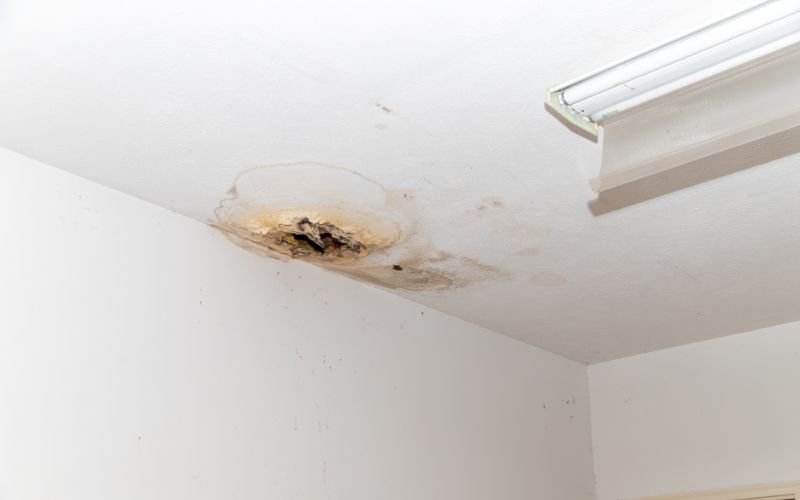
Dark ceiling stains after rain almost always mean water is finding its way into your home through the roof, gutters, or trapped condensation. The longer you ignore them, the more damage and mould risk you take on. These stains don’t fade on their own. Painting over them without finding the source only hides the problem temporarily.
Melbourne’s weather makes this especially common. Long dry spells followed by sudden, heavy downpours put real stress on ageing roofs. Pointing dries out and cracks, sarking perishes, and flashing lifts. All of this makes a leak more likely the next time it rains heavily.
This guide breaks down exactly what causes dark ceiling stains and how you can tell a roof leak apart from condensation. It also covers what to do in the first 24 hours after you spot one, before it becomes a bigger repair.
Key Takeaways
- Dark ceiling stains after rain usually come from a roof leak, gutter overflow, or condensation, each leaves different colour and shape clues.
- A stain that appears during or right after rain points to a roof leak; one that appears in still, humid weather points to condensation.
- Mould can start growing on wet plasterboard within 24-48 hours, so acting quickly matters.
- Painting over a ceiling stain without fixing the source won’t stop it from returning.
- Failed ridge caps, lifted flashing, and perished sarking cause most Melbourne ceiling stains, especially after the city’s dry-to-wet weather swings.
What Causes Dark Ceiling Stains After Rain?
Three things cause most dark ceiling stains after rain: a roof leak, gutter overflow, or trapped condensation. Water tracks along timber framing and pools on plasterboard, leaving the brown or yellow-brown mark you see on the ceiling.
Roof Leaks
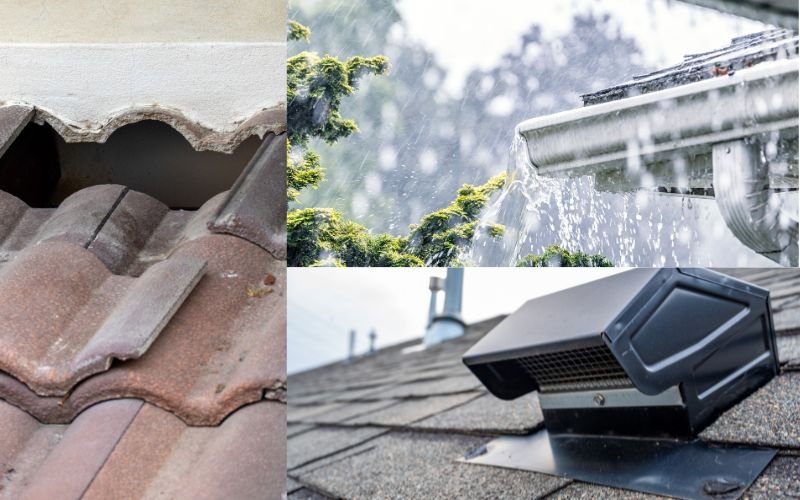
Water enters through cracked tiles, failed pointing, or damaged flashing, then travels along the roof frame before it drips onto the ceiling. The stain often appears some distance from the actual entry point, which is why the leak can be tricky to trace without a proper inspection.
Gutter Overflow
When gutters block with leaves and debris, rainwater backs up under the roofline instead of draining away. This pushes moisture into the eaves and ceiling cavity, especially during heavy or prolonged rain.
Condensation Build-Up
Poor ventilation in the roof space traps warm, moist air, which then condenses on cool surfaces like plasterboard. Unlike a leak, condensation staining tends to appear gradually and isn’t tied to a specific rain event.
How Can You Tell the Difference Between a Roof Leak and Condensation?
You can tell a roof leak from condensation by checking two things: the stain’s shape and when it appears. A leak produces a defined, often ring-shaped stain that shows up during or shortly after rain. Condensation produces a softer, more spread-out patch that appears gradually in still, humid weather, regardless of rainfall.
| Clue | Roof Leak | Condensation |
| Timing | Appears during or right after rain | Builds up gradually, unrelated to rain |
| Shape | Defined edges, often ring-shaped | Diffuse, spread-out patch |
| Colour | Yellow-brown to dark brown | Grey-brown, sometimes with a musty smell |
| Location | Often near roof penetrations or valleys | Common in poorly ventilated ceiling areas |
Stain Colour and Shape Clues
A fresh leak usually looks darker at the centre and fades toward the edges. An older, repeated leak develops visible rings as each new wetting cycle adds a layer.
Timing, Does It Appear During Rain or After?
If you notice the stain growing while it’s actively raining, you’re very likely dealing with a roof leak, not condensation.
Which Roof Faults Actually Cause These Stains?
Three roof faults cause most leak-related ceiling stains: ridge cap failure, flashing failure, and perished sarking. Each fails differently, but all let water into the roof cavity.
Ridge Cap Failure
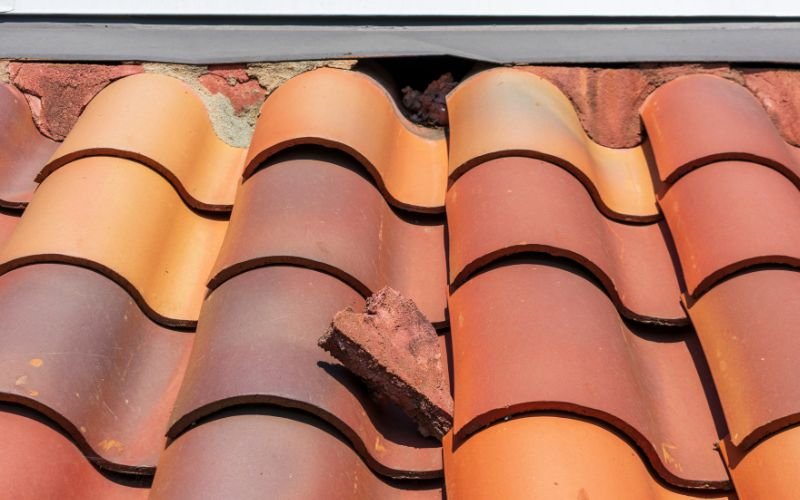
The ridge caps sit along the roof’s peak, sealed with pointing or flexible pointing compound. As this seal ages and cracks, particularly after Melbourne’s dry spells followed by sudden downpours, water gets underneath the caps and runs down into the ceiling below. Homeowners searching for roof restoration in Doncaster often start there after noticing exactly this kind of ridge cap deterioration on older tile roofs.
Flashing Failure
Flashing seals joints around chimneys, skylights, and roof valleys. Once it lifts, rusts, or cracks, these joints become direct entry points for water during rain.
Damaged or Perished Sarking
Sarking is the protective membrane installed under roof tiles or sheeting. When it perishes or tears, it can no longer stop water that gets past the tiles, so leaks reach the ceiling far more easily.
Does a Dark Ceiling Stain Mean Mould?
A dark ceiling stain doesn’t automatically mean mould, but it creates the exact conditions mould needs to grow. Once plasterboard stays wet, mould can start developing within 24 to 48 hours.
How Fast Mould Develops After Water Exposure
Mould spores are already present in most indoor environments. Once moisture and warmth are added, visible growth can appear in as little as one to two days.
Health Risks of Leaving It Untreated
Prolonged exposure to mould can trigger respiratory irritation, allergic reactions, and worsened asthma symptoms, particularly for children and older adults.
What Should You Do First When You Spot a Stain?
The moment you notice a dark ceiling stain, contain the water, document the damage, and avoid painting over the mark until you’ve found the cause.
- Contain the water – Place a bucket underneath if it’s actively dripping, and move furniture or valuables out of the area.
- Document the damage – Take clear photos of the stain’s size, colour, and shape, along with the date you first noticed it. This helps a roofer diagnose the cause and supports any insurance claim.
- Check the roof space if it’s safely accessible – Look for obvious wet insulation, staining on the underside of the roof, or daylight coming through gaps. Skip this step if you’re not confident accessing the roof space safely.
- Don’t paint over it yet – Painting over a ceiling stain hides it temporarily, but the underlying moisture problem stays. It usually resurfaces, often worse than before.
How Urgent Is It – Can It Wait?
A dark ceiling stain needs urgent attention if it’s actively growing, dripping, or accompanied by a musty smell. It can usually wait for a scheduled inspection if it’s small, dry, and hasn’t changed in size.
Signs It’s an Emergency
Active dripping, a rapidly spreading stain, or a sagging patch of ceiling all signal you need a roofer immediately, since these point to an ongoing leak that’s actively damaging the structure.
Signs It Can Wait for a Scheduled Inspection
A small, dry, stable stain that hasn’t grown since you first noticed it usually indicates a past leak that’s already been sealed or a minor issue you can book in for a standard inspection. Homeowners around Mount Waverley dealing with this kind of stable, older staining often book a roof restoration in Mount Waverley for inspection. This confirm the roof’s overall condition rather than treating it as an emergency.
What Does It Cost to Fix the Underlying Roof Leak?
Fixing a roof leak causing ceiling stains typically costs between $250 and $1,500, depending on the cause and how much damage has already occurred.
| Cause | Typical Cost Range (AUD) |
| Re-pointing or re-bedding ridge caps | $250 – $600 |
| Flashing repair or replacement | $300 – $800 |
| Sarking replacement (localised) | $500 – $1,200 |
| Full roof restoration (if multiple faults exist) | $4,000 – $12,000+ |
Why Delaying Repairs Increases Cost
The longer a leak continues, the more it damages sarking, insulation, and ceiling plasterboard, which turns a simple repair into a much larger restoration job. This is exactly the scenario that leads many homeowners in Box Hill to need a full roof restoration quote instead of just a single, low-cost repair.
Fix the Cause, Not Just the Stain
A dark ceiling stain after rain is your roof telling you something’s wrong, and it won’t fix itself. Whether the cause is a cracked ridge cap, lifted flashing, perished sarking, or trapped condensation, the stain will keep coming back until someone identifies and repairs the actual source.
Acting early keeps a small, low-cost repair from turning into a full ceiling replacement or roof restoration. If you’ve spotted a stain, don’t wait for it to spread. Eufouria’s roof inspection team can pinpoint exactly where the water is getting in and give you a clear, upfront quote to fix it properly the first time.
Noticed a dark ceiling stain in your home? Book a roof inspection with Eufouria today and stop the leak before it costs you more.
Book Your Roof Restoration
-
 October 12,2026
Signs Your Roof Coating Has Failed and Needs Recoating
-
 July 6,2026
Ageing Roofs in Melbourne Homes: Repair Now or Wait It Out
-
 June 10,2026
Cracked roof tiles vs. damaged ridge caps: repair differences and costs
-
 May 18,2026
How to Extend the Life of an Aging Roof
-
April 7,2026
How Wind Lifts Roof Tiles (And How to Prevent It)
-
March 13,2026
Roof Flashing Around Chimney Is Leaking
-
February 3,2026
Possum vs. Roofer: Who is Actually Responsible for That Hole?
-
January 12,2026
Why Your Roof Restoration Must Include Pest-Proofing
-
December 19,2025
How Gutter Pitch Errors Lead to Roof Valley Damage
-
November 27,2025
How to Spot a Dodgy Roof Quote in Melbourne
-
November 13,2025
Maintenance Tips for Slatted Roof Systems in Melbourne
-
October 30,2025
Colour & Style Trends for Roofing in Melbourne
-
October 7,2025
How to Prevent & Fix Flat Roof Leaks in Melbourne
-
September 29,2025
Role Of Ember Attack In Roof Ignition & How To Prevent It
-
September 16,2025
Roof Ventilation and Repairs: Why Melbourne Homes Overheat
-
August 19,2025
Roof Leak or Plumbing Leak? How to Tell the Difference in Homes
-
August 4,2025
Gutter and Roof Safety Tips Before Bushfire Season in Victoria
-
July 18,2025
The Ultimate Roof & Gutter Maintenance Checklist for Melbourne Homeowners
-
July 9,2025
Guide to Roof Tile Types in Australia and How to Repair Them
-
June 26,2025
Metal vs. Asphalt: Which Roofing Material Lasts Longer?
-
June 6,2025
Drones in Roofing: How We Inspect Roofs Safely and Quickly in Melbourne
-
May 14,2025
5 Common Roof Problems in Coastal Areas (and How to Prevent Them)
-
April 16,2025
Dealing with Gutter Blockages During Melbourne’s Rainy Season: Repair Tips & Tricks
-
March 27,2025
Tile Roof Restoration – Key Signs Your Tiled Roof Needs Attention
-
March 7,2025
How to Get Your House Ready for Roof Restoration
-
February 28,2025
Why Is Your Roof Paint Peeling? Top Causes and Solutions
-
February 10,2025
The Importance of Roof Inspections Before Buying a Home in Melbourne
-
January 15,2025
Heat-Reflective Roof Restoration Coatings Lower Energy Bills
-
January 9,2025
The Hidden Dangers of Roof Mould: How It Affects Your Home and Health
-
December 26,2024
Why Melbourne’s Summer Is the Ideal Season for Roof Restoration
-
December 17,2024
Rooftops Around the World: Comparative Analysis With Australia’s Superior Guidelines
-
November 25,2024
Why Gutter Cleaning in Melbourne is Crucial Before the Winter Season
-
October 19,2024
Common Roof Problems in Melbourne: Causes and Effective Solutions
-
September 30,2024
Roof Repair Signs: What Every Melbourne Homeowner Should Know
-
September 23,2024
Tips to Maintain and Extend the Life of Your Restored Roof in Melbourne
-
August 26,2024
The Complete Guide for Roof Inspections and Restorations
-
August 12,2024
Restoration vs. Repairs: Choose the Right One for Your Home


